Travelling to the Middle East is an exciting experience, whether you are exploring Dubai, visiting Saudi Arabia, discovering Jordan's ancient cities, or planning a cultural trip to Iraq. However, a comfortable international journey requires more than booking flights and hotels.
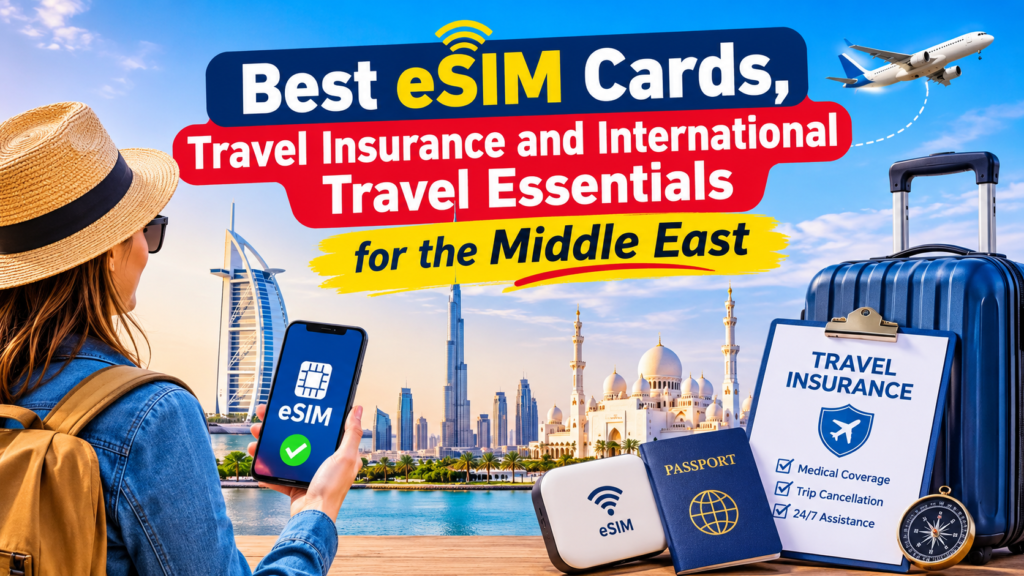
Choosing the right travel eSIM, buying suitable travel insurance, and preparing essential documents can help you avoid unexpected problems. Here is a practical guide to staying connected, protected, and organised during your Middle East trip.
Best eSIM Cards for Middle East Travel
An eSIM is a digital SIM that allows travellers to activate mobile data without purchasing a physical SIM card. It is particularly useful when visiting multiple Middle Eastern countries.
Popular international eSIM providers include:
- Airalo: Offers country-specific and regional data plans for international travellers.
- Holafly: Provides unlimited-data options for selected destinations, subject to fair-use conditions.
- Nomad: Offers flexible prepaid data packages for short holidays and longer trips.
- Saily: Provides straightforward eSIM installation and international mobile data plans.
Before purchasing, check your phone's eSIM compatibility, the provider's destination coverage, data allowance, validity period, and hotspot restrictions.
Why Travel Insurance Is Important
Travel insurance provides financial protection against certain unexpected situations during international trips. Medical treatment, cancelled flights, and lost luggage can create significant expenses.
A suitable Middle East travel insurance policy may include:
- Emergency medical treatment and hospitalisation
- Emergency medical evacuation
- Trip cancellation or interruption
- Lost, stolen, or delayed baggage
- Travel delays and missed connections
- 24-hour emergency assistance
Compare policies from established insurers and carefully review exclusions, coverage limits, and destination restrictions. Some policies exclude high-risk activities or travel to destinations covered by government travel warnings.
Check eVisa Requirements Before Travelling
Visa requirements vary across Middle Eastern countries depending on nationality, travel purpose, and length of stay.
Saudi Arabia eVisa Requirements
Saudi Arabia offers electronic tourist visas to travellers who meet its eligibility conditions. Before planning a holiday, visitors can check eligible countries for Saudi Arabia eVisa to understand the available application options.
Travellers should also confirm passport validity, permitted activities, and the latest official entry regulations.
Jordan Tourist eVisa
Jordan attracts visitors with Petra, Wadi Rum, the Dead Sea, and Amman. Depending on nationality, tourists may qualify for an electronic visa or another entry arrangement.
Travellers can explore Jordan tourist eVisa information before preparing their itinerary and travel documents.
Iraq eVisa Documentation
Visitors planning to travel to Iraq should carefully check the entry rules applicable to their nationality and destination.
Reviewing the required documents for Iraq eVisa can help travellers prepare their paperwork before applying. Always confirm current requirements and travel safety advice through official government sources.
Essential Items to Pack for the Middle East
The Middle East includes hot desert regions, modern cities, coastal destinations, and cooler mountain areas. Packing according to the season and local customs is important.
Essential travel items include:
- A valid passport and required travel authorisation
- Travel insurance documents and emergency contacts
- An eSIM-compatible smartphone and charging cables
- A suitable international travel adapter
- Lightweight, breathable, modest clothing
- Sunscreen, sunglasses, and a reusable water bottle
- Prescription medicines in original packaging, with supporting documentation where required
Keep digital and offline copies of important bookings and documents.
Tips for a Smooth Middle East Journey
Book accommodation in advance, research local transportation, and check the weather before departure. Download offline maps and arrange mobile connectivity before arriving.
Respect local customs, particularly when visiting religious sites. Check whether medicines and personal items are permitted at your destination.
Conclusion
A successful Middle East trip begins with careful preparation. Choosing a reliable eSIM, purchasing appropriate travel insurance, checking eVisa requirements, and packing essential items can make international travel easier.
Before departure, verify the latest official entry requirements and travel advisories for every destination on your itinerary. A little preparation can make your journey safer, smoother, and more enjoyable.
Comments